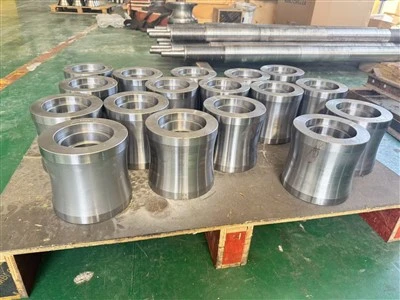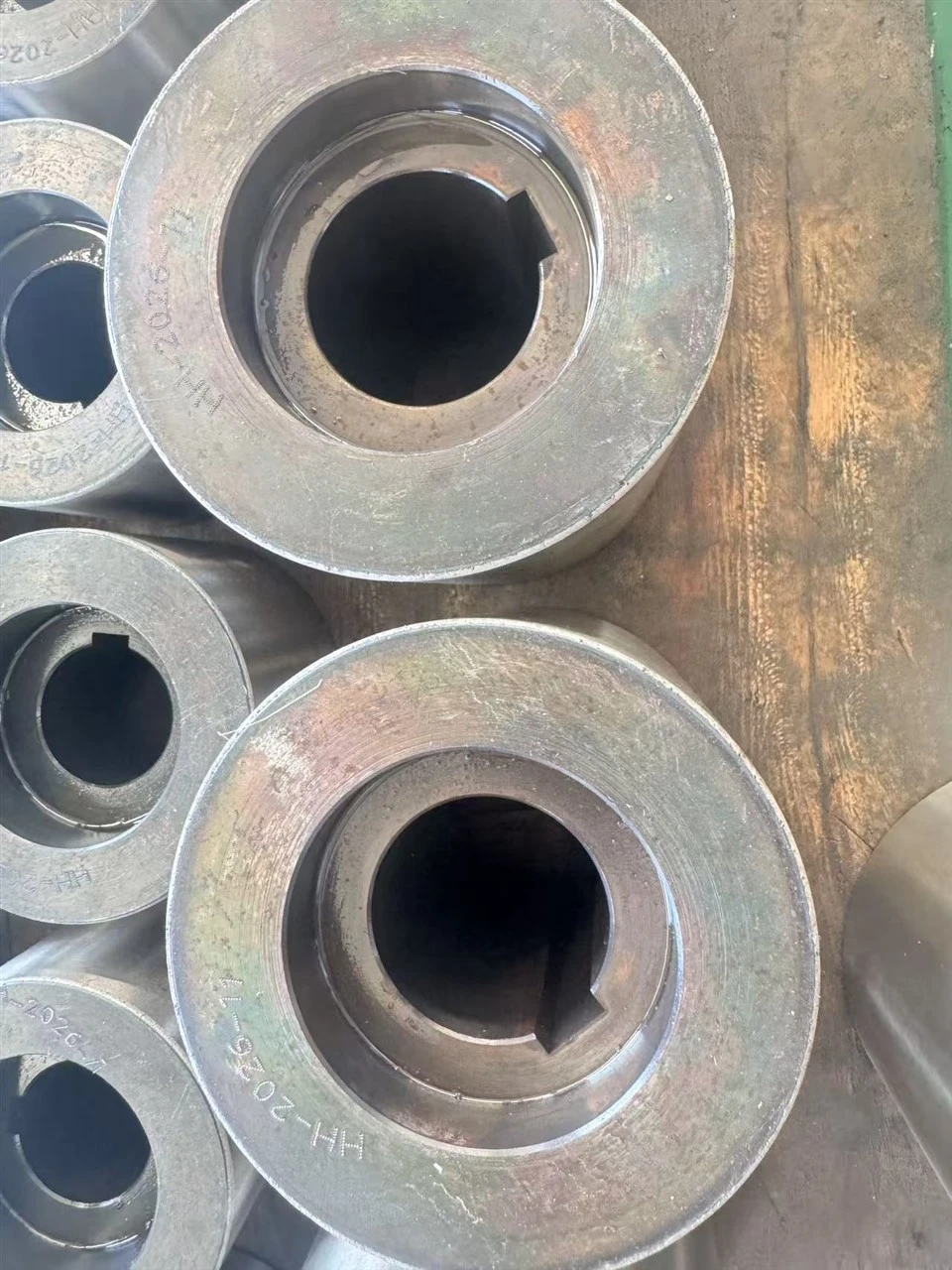
Product Overview
Subjected to frequent speed change & start‑stop operation, hot‑bar impact, oxide‑scale abrasion and cyclic thermal shock from red‑hot small bars. Adopting advanced laser cladding surface hardening technology, high‑performance alloy powder is metallurgically fused onto roller working surface to form dense, crack‑free protective overlay.
It solves common failures: fast surface wear, thermal‑fatigue cracking, coating spalling and bar surface indentation. Both new manufacturing and remanufacturing for worn rollers are available. Site practice proves laser‑cladded variable‑frequency rollers maintain stable profile under frequent variable‑speed cyclic service.
Core Technology - Laser Cladding
High‑energy laser beam acts as heat source; alloy powder is synchronously fed into molten pool. Powder and roller substrate melt and solidify rapidly to achieve reliable metallurgical bonding. Dilution rate is precisely controlled within 3%‑8% (premium grade below 5%), fully retaining intrinsic performance of cladding alloy. WC tungsten‑carbide composite cladding is optional for heavy‑abrasion operating conditions.
Key Product Features
✅ High‑strength Metallurgical Bonding
Cladding layer forms genuine metallurgical bonding with roller base metal, reaching substrate‑equivalent bonding strength. Resists peeling and cracking under frequent speed‑switching impact and alternating hot‑cold cycles. Far higher reliability compared with thermal‑spray coatings, cutting unplanned downtime for small‑bar rolling lines.
✅ Minimal Heat‑Affected Zone & Low Distortion
Concentrated laser‑energy input creates small molten pool and fast cooling speed. Roller overall deformation is strictly controlled, base‑material microstructure remains stable. Less post‑cladding grinding allowance required, well‑suited for precision variable‑frequency rollers with strict roundness and run‑out tolerance for high‑frequency speed‑change operation.
✅ High Hardness & Excellent Wear Resistance
Surface hardness reaches HRC45‑55. With WC‑reinforced composite cladding, service life is 2‑5 times of conventional hard‑faced rollers and 5‑10 times of ordinary heat‑treated rollers. Outstanding anti‑scouring performance against oxide‑scale and hot small‑bar friction, keeps stable roller profile and friction coefficient under continuous variable‑speed operation.
✅ Good Thermal‑Fatigue & High‑Temperature Resistance
Nickel‑base alloy grades such as Ni625 / Inconel625 support continuous service temperature of 500‑800℃, resisting high‑temperature oxidation and thermal fatigue caused by intermittent contact with red‑hot small‑size bars. Partial models adopt hollow water‑cooled construction for heat dissipation.
✅ Local Strengthening & Roller Remanufacturing
Cladding treatment is only applied on roller working surface instead of full‑body cladding, saving expensive alloy raw materials and shortening lead‑time. Worn, impact‑damaged or dimension‑deviated old variable‑frequency rollers can be restored to original drawing dimension and performance. ‑ Repair cost: 30%‑70% lower than brand‑new rollers ‑ Delivery cycle: shortened more than 50% ‑ Multiple repeated remanufacturing cycles are supported.
✅ Automated Manufacturing & Eco‑Friendly
Produced by multi‑axis robotic laser cladding equipment with automatic powder feeding and intelligent path planning. Coating quality maintains high consistency for batch orders. Compared with traditional manual hard‑facing welding, it generates less smoke, spatter and energy consumption, complying with green‑manufacturing standards.
Application Scenarios
Specially for small bar rolling mill roller tables, installed on mill exit, run‑out section and transfer section of small‑diameter bar production lines. Realizes independent variable‑speed drive, bar separation and speed matching for small‑size rebar, round steel and alloy bars.
Performance Comparison
| Comparison Item | Laser‑Cladded Variable Frequency Roller for Small Bar Mill Roller Table | Ordinary Heat‑Treated / Hard‑Faced Roller |
|---|---|---|
| Bonding Mode | Metallurgical bonding | Mechanical bonding / weak weld overlay |
| Thermal Deformation | Very small | Relatively large |
| Service Life under frequent speed‑change impact | Significantly extended | Short, frequent replacement |
| Anti‑Impact & Anti‑Spalling | Excellent | Prone to crack & coating peel‑off |
| Remanufacturable | Supports multiple repairs | Hard to repair |
| Influence on Small‑bar Surface | Low scratch risk | High risk of surface defects |
Summary
Laser‑cladded variable‑frequency rollers for small bar rolling mill roller tables solve typical pain‑points: accelerated wear caused by frequent start‑stop & speed adjustment, thermal‑fatigue cracking and coating spalling. Stable friction performance guarantees accurate speed difference control and reliable separation of small‑size bars, reduces spare‑part consumption and maintenance downtime, lowers comprehensive operating cost for steel plants.
Custom cladding‑material selection, special dimension adaptation and remanufacturing quotation for used rollers are available. Please contact our technical team.
Hot Tags: variable frequency roller for small bar rolling mill roller table, China variable frequency roller for small bar rolling mill roller table manufacturers, suppliers, factory, acceleration roller conveyor, conveyor roller material, conveyor rollers, high roller conveyor, Laser Cladding Acceleration Roller Conveyor, Laser Cladding Tungsten Carbide Roller Conveyor